High-capacity associative memory in a quantum-optical spin glass
Science 394, 212 (2026).
Rubidium atoms wired together by photons realize spin glasses and quantum neural networks.
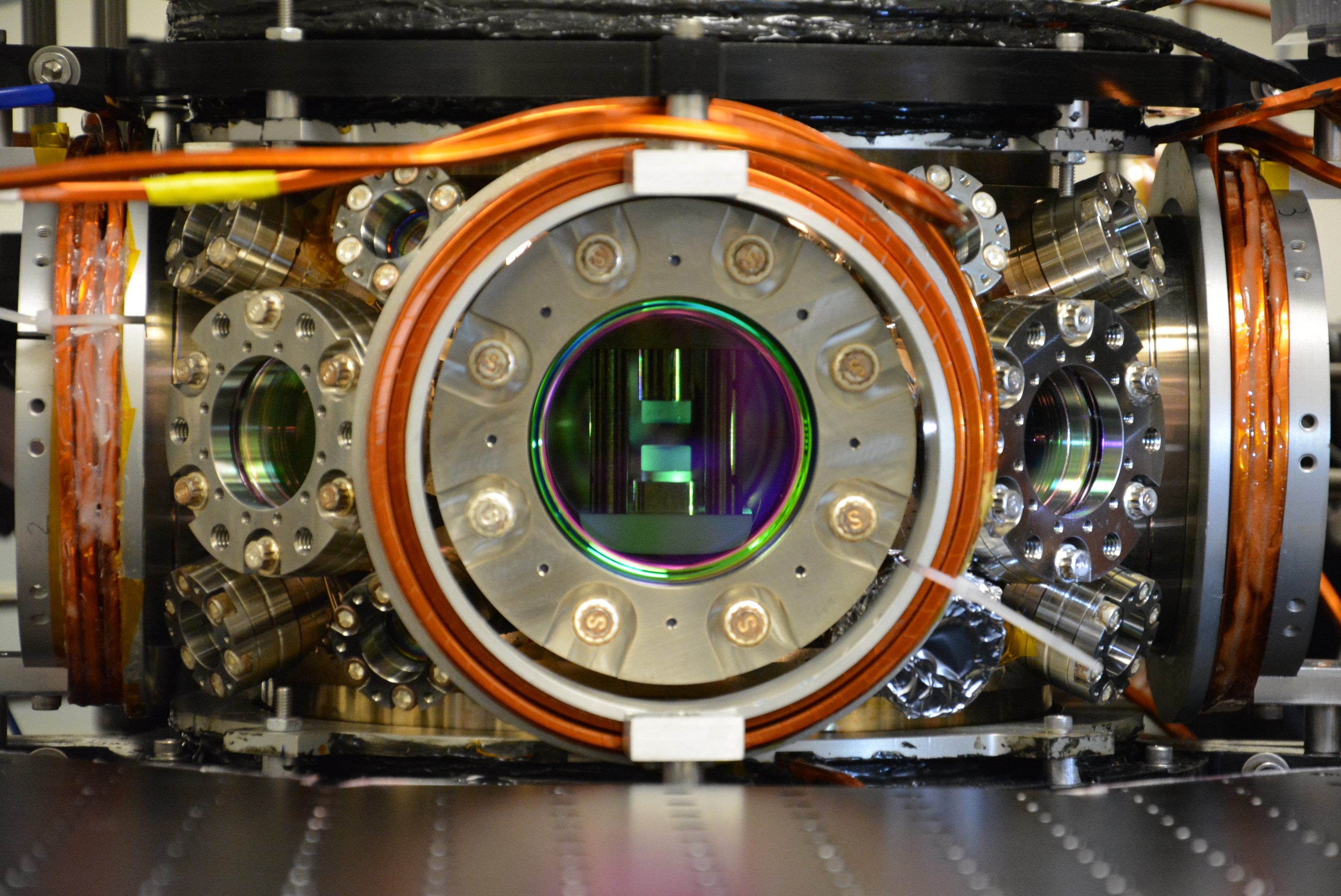
What is a quantum neural network and how might it exhibit computational advantage? Can we create a spin glass made of atomic spins and photons and use it to resolve longstanding mysteries surrounding spin-glass order? We are tackling these fundamental and technologically relevant questions using our novel multimode cavity QED-BEC apparatus. The system provides strong, photon-mediated interactions among atoms trapped within the cavity resonator. Photons virtually scattered among the atoms cause the system to superradiate and self-organize into various exotic forms of quantum matter such as quantum spin glasses---which can be used as quantum neural networks and associative memories---and quantum liquid crystals. As a first step toward the latter, we recently created a super solid that vibrates by forming an optical lattice with sound.
Science 394, 212 (2026).
Physical Review Letters 135, 160403 (2025)
Science 389, 1122 (2025)