Dr. Alexander Dudchenko

Dr. Alexander Dudchenko

Research Staff

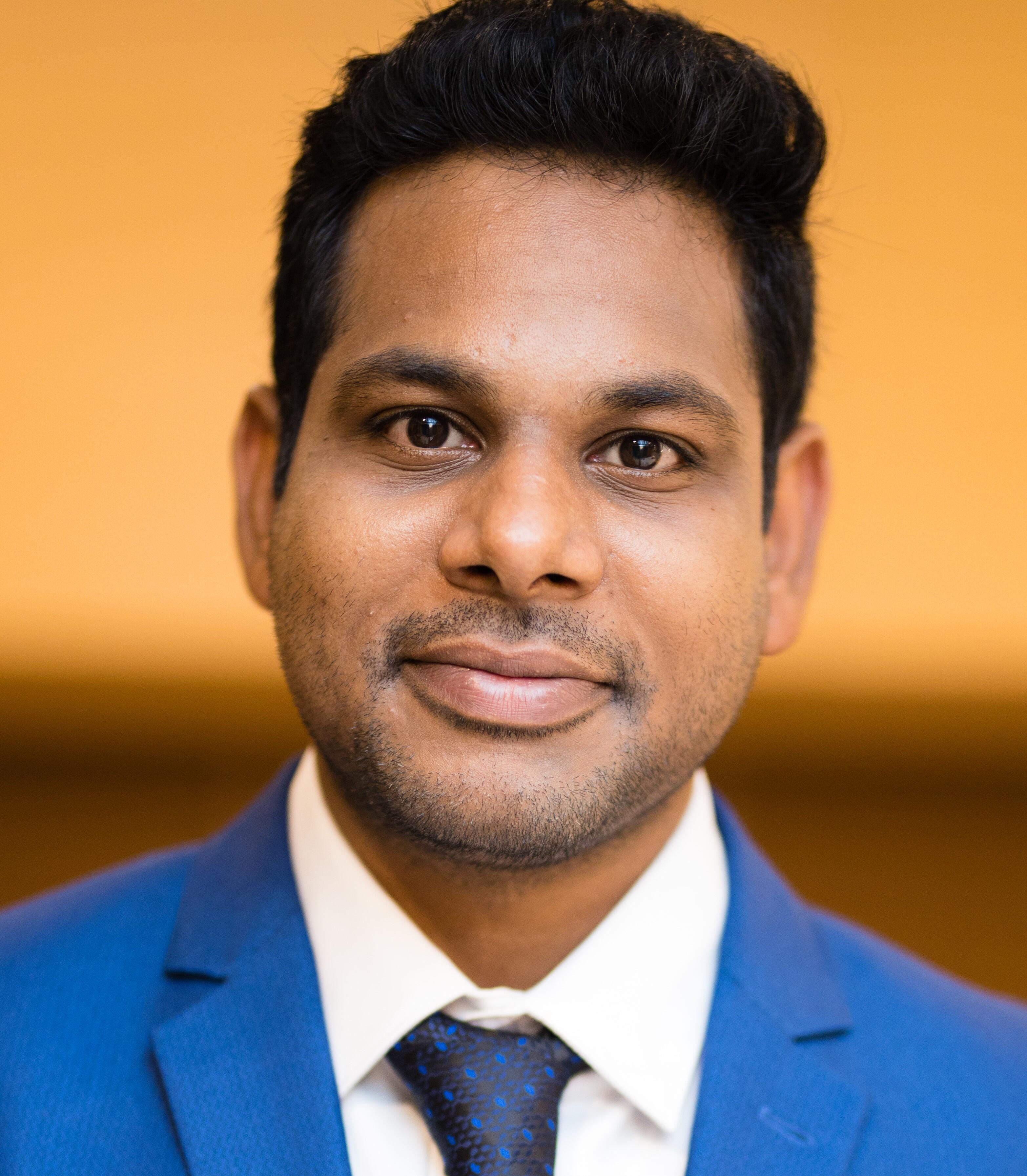
Alexander V. Dudchenko (Ph.D) is a staff scientist at SLAC National Accelerator Laboratory. His work is focused on developing detailed and accurate techno-economic process models of emerging separation systems used in water treatment and critical mineral extraction. He leverages a combination of advanced equation-oriented programming methods (Using WaterTAP), gray box methods and machine learning models to quantify the performance and costs of new technologies and treatment trains, identify critical areas of innovation, and developing strategies for optimizing process layout and operation.

Projects

WaterTAP: Process modeling and technoeconomic assessment platform
Carson Tucker
Carson Tucker
Dr. Alexander Dudchenko
Dr. Charan Samineni
Dr. Charan Samineni
Akshay Rao
Akshay Rao
Clara Drysdale
Clara Drysdale
Daly Wettermark
Daly Wettermark
Dr. Nitish Sarker
Dr. Nitish Sarker
Abdullah Alhussain
Abdullah Alhussain

Municipal and industrial water treatment facilities face increasingly complex technology decisions for treating nontraditional waters, water reuse, and resource recovery. Current tools provide limited capability to rigorously compare alternatives, predict performance under variable conditions, or justify R&D and pilot investments. This results in conservative design decisions, costly and time-intensive piloting programs, and missed opportunities for innovation. WaterTAP is an open-source, physics-based modeling framework for designing and evaluating advanced water treatment systems. WaterTAP process models are built within an optimization framework to solve for cost-optimal design and operation. WaterTAP enables researchers and engineers to simulate complex treatment trains; screen and prioritize technologies for piloting; integrate facility data into predictive models; and quantify the value of innovation.

  • National Alliance for Water Innovation (NAWI)
Integrated decision-making for industrial energy flexibility
Akshay Rao
Akshay Rao
Fletcher Chapin
Fletcher Chapin
Carson Tucker
Carson Tucker
Dr. Erin Musabandesu
Dr. Haochi Wu
Dr. Haochi Wu
Daly Wettermark
Daly Wettermark
Dr. Alexander Dudchenko

Most pathways for decarbonizing the electricity sector by 2050 include substantial increases in intermittent renewable generation paired with several TWh of grid-scale energy storage. Grid scale storage includes the ability to shift or schedule large amounts of power over time and can be deployed via a diverse range of technologies, like batteries or pumped hydropower. This project aims to understand the degree to which we can use existing infrastructure as virtual storage, by scheduling the operations and consequently the power consumption of electrified industrial processes (e.g., water treatment plants, chemical manufacturing, data centers, etc.). Our group develops methods rooted in numerical optimization to design, operate, and evaluate energy flexibility strategies across a range of industrial sectors and geographic regions. By modeling these processes from the ground up, we aim to understand the cost and feasibility requirements to unlock more flexibility from existing infrastructure and strategies to design and deploy flexibility more effectively for next generation infrastructure.

Critical Mineral Extraction from Conventional and Unconventional Sources
Dr. Charan Samineni
Dr. Charan Samineni
Carson Tucker
Carson Tucker
Dr. Alexander Dudchenko
Clara Drysdale
Clara Drysdale
Dr. Anthony Cheng
Dr. Anthony Cheng

Critical minerals like lithium, cobalt, and rare earth elements are essential to the energy transition, yet current supply chains are geographically concentrated, environmentally costly, and vulnerable to market fluctuations. Our group develops techno-economic models to evaluate both conventional and emerging extraction pathways for these materials. A core focus is lithium extraction, where we compare the cost, energy intensity, and scalability of conventional evaporation-pond brine processing against direct lithium extraction (DLE) technologies for unconventional brine sources such as geothermal brines. As part of this effort, we partner with teams developing electrodialysis-based lithium extraction technologies under separate DOE-funded projects, evaluating their techno-economic performance and scale-up potential relative to conventional and other DLE approaches. We also contribute to the HERMES consortium (Hastening the Exploration & Recovery of Minerals from Earth Energy Systems), an initiative to quantify the potential value of critical minerals contained in waste resources across the United States in diverse resource and market combinations, including coal refuse, coal ash, mine tailings, acid mine drainage, and red mud. Working alongside our colleagues in the SLAC National Accelerator Laboratory and six other national labs, we model and evaluate production processes and their costs, integrating AI and data-driven methods, with the broader goal of identifying which waste-to-mineral pathways are worth pursuing at scale.

  • Advanced Research Projects Agency - Energy
  • Stanford Sustainability Accelerator
  • Department of Energy - Critical Minerals Innovation Hub

Technoeconomic Assessment of Brine Valorization from Brackish Water Desalination
Caroline Adkins
Caroline Adkins
Carson Tucker
Carson Tucker
Dr. Alexander Dudchenko
Dr. Alison Fritz
Dr. Alison Fritz

Desalination at inland brackish groundwater treatment plants is currently limited by high costs of concentrate management and disposal. With current methods, 5-25% of the feed is disposed of as concentrate, with 98% of disposal using conventional methods (i.e. no byproduct recovery). The levelized cost of water (LCOW) for current plants in operation ranges from $0.42-1.5/m3. This project aims to assess the technical and economic feasibility of industrial ecosystems to desalinate brackish groundwater and supply existing and potential markets for clean concentrate or other bulk constituents from the brine. Specific project goals include: 1) Developing location specific byproduct revenue models using market assessments, and 2) Creating treatment train schemas in WaterTAP for treatment and valorization of brackish groundwater and establish pipe parity cost and performance targets for brackish groundwater treatment.

  • National Alliance for Water Innovation (NAWI)

Publications

← Back to Who We Are