Daly Wettermark

Daly Wettermark

PhD Student

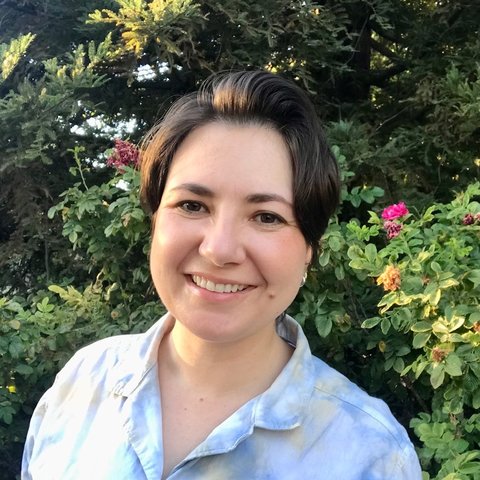
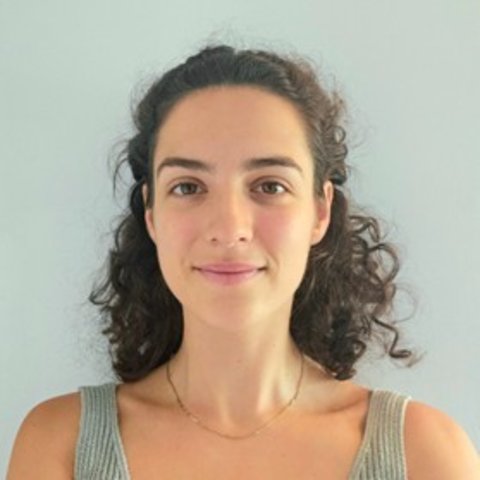
Daly Wettermark studies the potential to mitigate greenhouse emissions from wastewater treatment plants by optimizing novel resource recovery and energy management techniques. Her PhD focus areas include: Energy flexibility as a means to shift load from aeration, Comparison of nitrogen recovery mechanisms for reducing biological nutrient removal process intensity, Integrating load shifting with operation of nitrogen recovery processes, and leveraging public data for wastewater treatment and resource recovery decision making. Daly previously worked as a product development engineer and corporate sustainability analyst with Xylem and as a volunteer with Water Sanitation and Hygiene (WASH)-focused nonprofit organizations.
Projects

WaterTAP: Process modeling and technoeconomic assessment platform
Carson Tucker
Carson Tucker
Dr. Alexander Dudchenko
Dr. Charan Samineni
Dr. Charan Samineni
Akshay Rao
Akshay Rao
Clara Drysdale
Clara Drysdale
Daly Wettermark
Daly Wettermark
Dr. Nitish Sarker
Dr. Nitish Sarker
Abdullah Alhussain
Abdullah Alhussain

Municipal and industrial water treatment facilities face increasingly complex technology decisions for treating nontraditional waters, water reuse, and resource recovery. Current tools provide limited capability to rigorously compare alternatives, predict performance under variable conditions, or justify R&D and pilot investments. This results in conservative design decisions, costly and time-intensive piloting programs, and missed opportunities for innovation. WaterTAP is an open-source, physics-based modeling framework for designing and evaluating advanced water treatment systems. WaterTAP process models are built within an optimization framework to solve for cost-optimal design and operation. WaterTAP enables researchers and engineers to simulate complex treatment trains; screen and prioritize technologies for piloting; integrate facility data into predictive models; and quantify the value of innovation.

  • National Alliance for Water Innovation (NAWI)
Integrated decision-making for industrial energy flexibility
Akshay Rao
Akshay Rao
Fletcher Chapin
Fletcher Chapin
Carson Tucker
Carson Tucker
Dr. Erin Musabandesu
Dr. Haochi Wu
Dr. Haochi Wu
Daly Wettermark
Daly Wettermark
Dr. Alexander Dudchenko

Most pathways for decarbonizing the electricity sector by 2050 include substantial increases in intermittent renewable generation paired with several TWh of grid-scale energy storage. Grid scale storage includes the ability to shift or schedule large amounts of power over time and can be deployed via a diverse range of technologies, like batteries or pumped hydropower. This project aims to understand the degree to which we can use existing infrastructure as virtual storage, by scheduling the operations and consequently the power consumption of electrified industrial processes (e.g., water treatment plants, chemical manufacturing, data centers, etc.). Our group develops methods rooted in numerical optimization to design, operate, and evaluate energy flexibility strategies across a range of industrial sectors and geographic regions. By modeling these processes from the ground up, we aim to understand the cost and feasibility requirements to unlock more flexibility from existing infrastructure and strategies to design and deploy flexibility more effectively for next generation infrastructure.

Unit Process Data for Wastewater Treatment Plants
Daly Wettermark
Daly Wettermark
Fletcher Chapin
Fletcher Chapin
Constance Rouffet
Constance Rouffet

Data on wastewater treatment plant’s (WWTP’s) installed processes enables regional and national emissions inventories and infrastructure planning, yet existing datasets like EPA's Clean Watershed Needs Survey (CWNS) suffer from data sparseness and update frequency. This project develops and validates a methodology combining large language models (LLMs) with formal ontologies to extract WWTP unit process configurations from unstructured regulatory permit documents. Applied to 609 California facilities, our ontology-structured LLM approach achieves an F1 score above 0.9 and reduces unit-process category-level error from 49% (CWNS baseline) to 13%. The methodology enables repeatable, automated extraction as permits are renewed and can be extended to other states and infrastructure types.

  • National Alliance for Water Innovation (NAWI)
  • Woods Institute for the Environment
  • Stanford SURGE Summer Program
Wastewater Modeling Platforms for Modern Facility Needs
Daly Wettermark
Daly Wettermark
Carson Tucker
Carson Tucker

This project seeks to provide a framework for selecting water resource recovery facility (WRRF) modeling platforms based on their ability to incorporate effluent limits, resource recovery, and energy-flexible operation goals. By benchmarking mechanistic (e.g., GPS-X, SUMO) and data-driven platforms, and considering the role of numerical optimization (e.g., WaterTAP), we demonstrate how platform selection affects design decisions including aeration system sizing, time-of-use electricity cost optimization, and identification of process synergies that reduce overall lifetime cost. Although established platforms excel at simulation of a given design, integrated design and operation decisions across complex treatment trains benefit from systematic design space exploration.

  • Woods Institute for the Environment

Publications

← Back to Who We Are